


Last Friday was the YC x Google DeepMind event - a fireside chat with Demis Hassabis and Garry Tan (now available online and worth a watch), a panel on the state of agents, talks on Gemma from founders and Google reps, and a demo happy hour after. We had a booth to demo Pomelli at the happy hour, but I arrived in the morning to get set up (and managed to squeeze some meetings in between). Before the event officially started, I was able to grab a seat near the back.
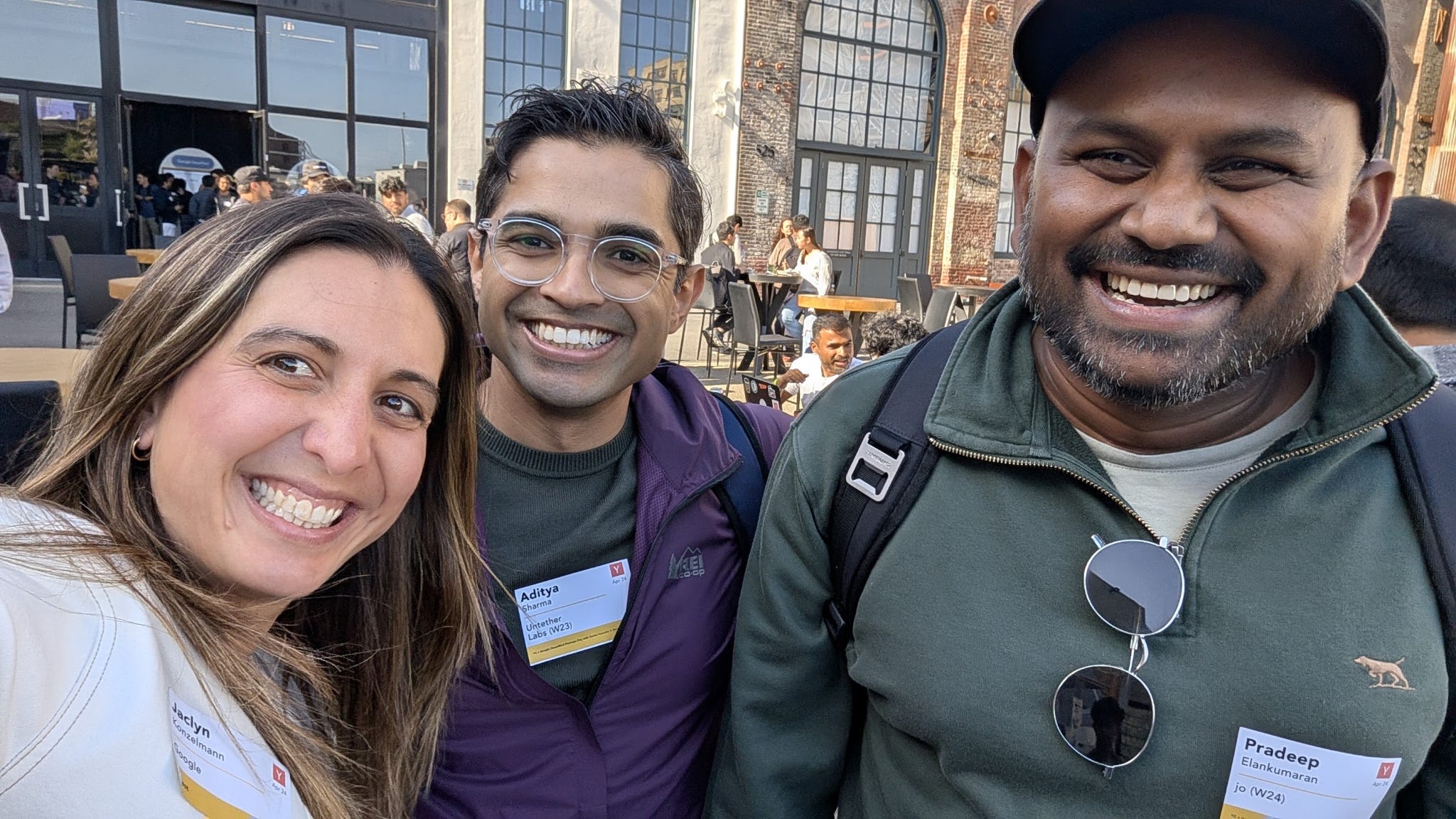
I ended up sitting between two YC founders I hadn’t expected to see. One was someone I went to University with who I hadn’t seen in years - Aditya (Untether Labs, W23). The other was someone I met more recently while living in the Bay Area - Pradeep (jo, W24). During a break between sessions, I was telling them about Pomelli and couldn’t resist suggesting we try it on their companies. Both of them pulled out their phones and put in their own websites…I’m always looking for a chance to get some real-world use feedback!
What Demis and Garry Said That Stuck
The fireside chat was the main event - and there are three things I keep coming back to.
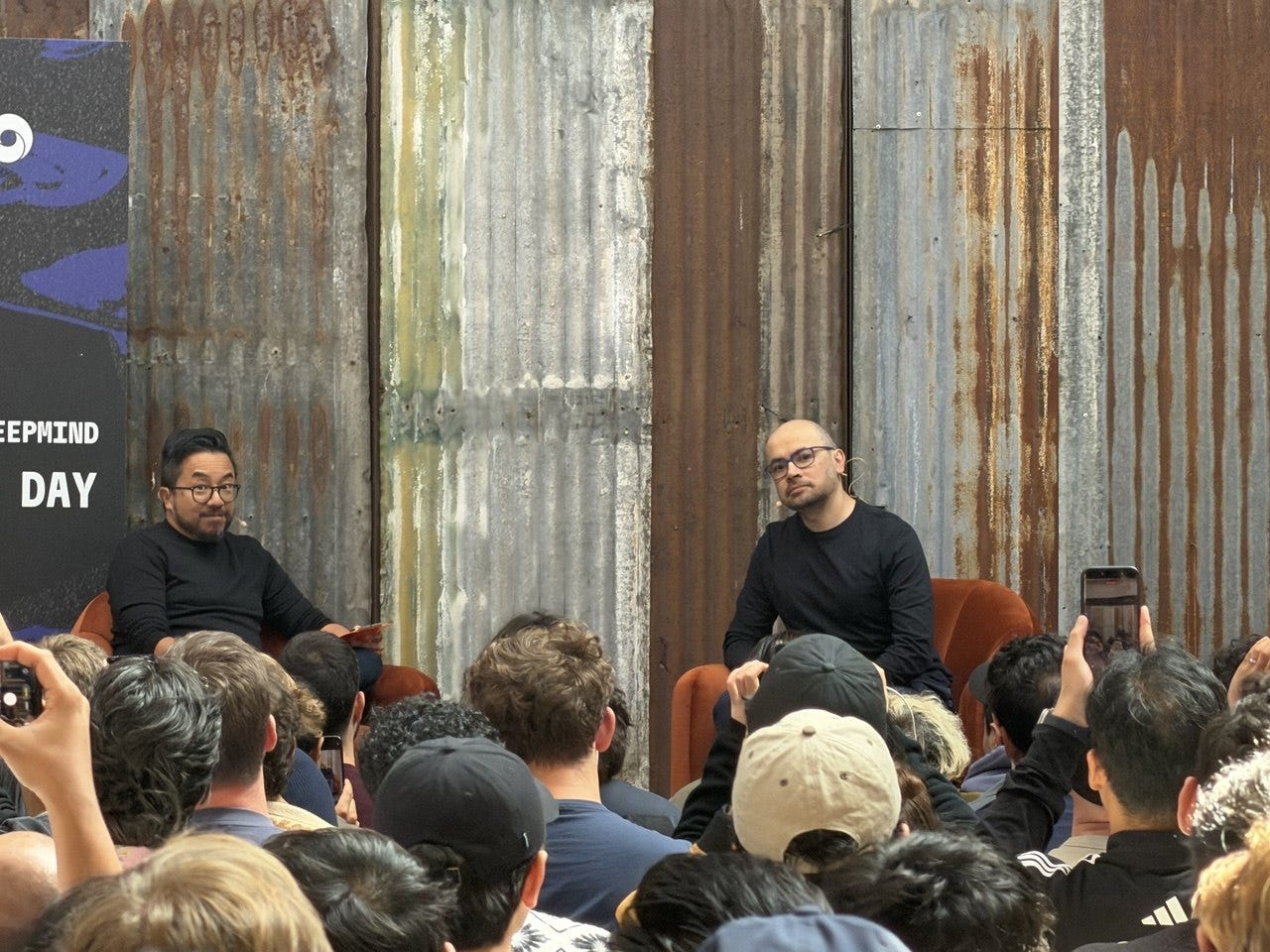
First: Nothing that’s long lasting or worthwhile is easy. This is the kind of thing that sounds obvious but when you’re in the middle of building something hard and wondering if it should be this difficult, it’s a helpful reminder that the challenges could be a good signal, not a warning. So if this is you - keep going!
Second: You’ve got to work on things you’re genuinely passionate about. I’ve heard versions of this advice my whole career, and it’s never landed harder than it does right now. When the space is moving this fast, the problems are this ambiguous, and the ground underneath feels like it’s shifting every other day - passion isn’t a nice-to-have. It’s the thing that keeps you going when the path forward isn’t clear.
Third - and this was the one I kept texting my husband about during the talk - the general feeling that we’re still so early. In context windows, in memory, in how models think and reason, in agents. There’s a lot of room for innovation in places we haven’t even fully mapped yet. One million tokens of context sounds like a lot until you think about multimedia. Twenty minutes of video and you’re already pushing limits. The thinking layer still has models going off on tangents, overthinking, burning tokens on reasoning that doesn’t serve the task.
We’re early. Not in a hand-wavy way. In a specific, technical, there-are-hard-problems-left-to-solve way.
What Early Looks Like on the Ground
After the fireside and panels, there was a demo happy hour. I was there with Daniel, the PM on my team working on Pomelli, and we had a booth set up to showcase Pomelli featuring a brand we’ve been having fun working with.
Pomelli is an AI marketing tool we’ve been building at Google Labs. You put in your website, it analyzes your brand - colors, fonts, values, imagery - and builds what we call a Business DNA. From there, it generates tailored campaign ideas and on-brand creatives you can download and post. It also does product photoshoots and animation. The whole point is to take a business from “I have a website” to “I have marketing content that looks like me“ in minutes.
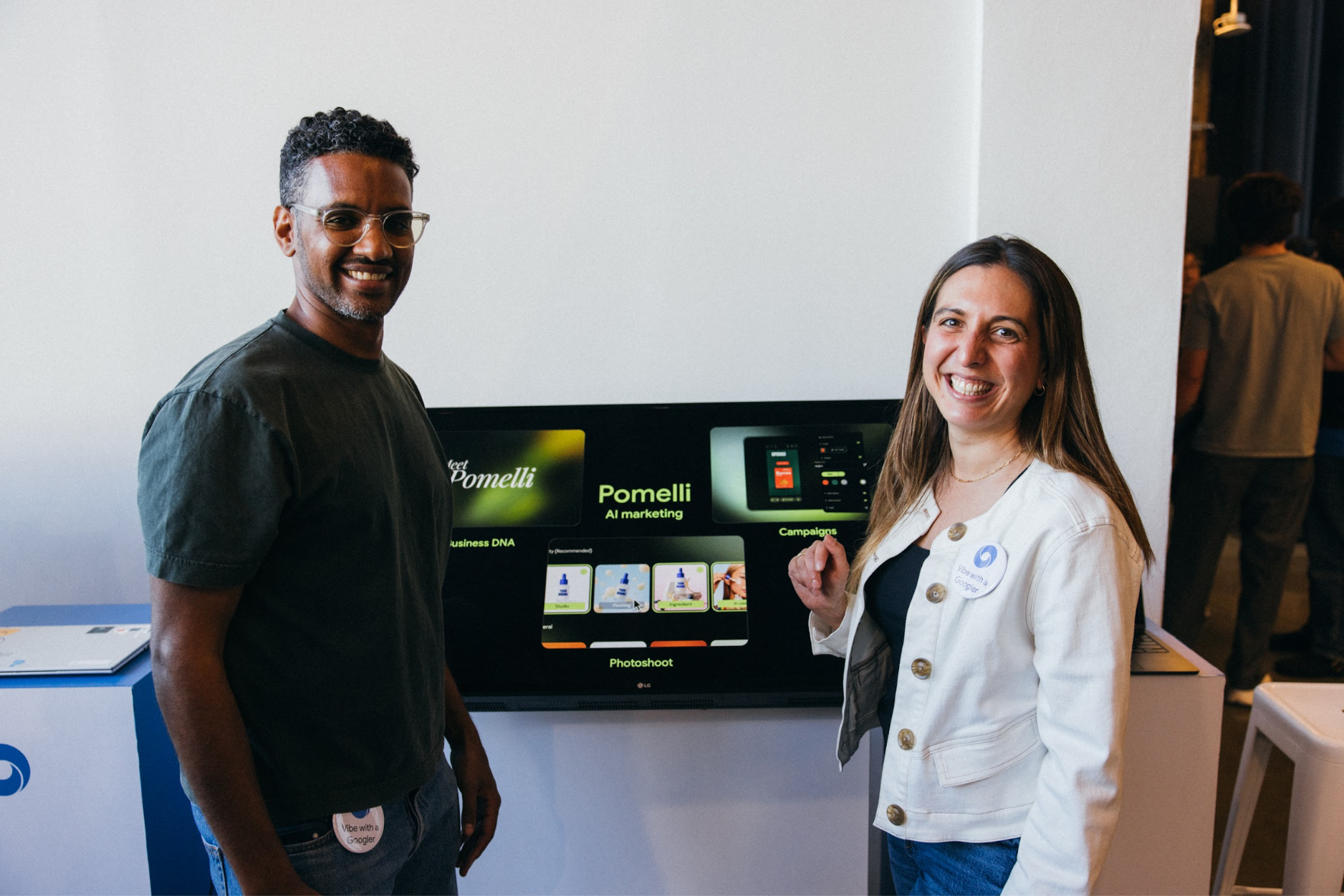
Here’s the thing I keep relearning: personal beats polished every time. While the brand we had ready to demo showcased really well, it wasn’t until we let founders put in their own websites, that the energy shifted completely. The prepped demo was fine. The live results on their company brands were addicting to engage with.
One founder remembered his brand’s hex code for purple off the top of his head - because his landing page didn’t actually have the color on it. The only place it showed up was in the logo, which was an image. He’d built the site himself and was the first to admit it wasn’t his proudest work. He rattled off the hex code, we added it, and the outputs that came back were better than what he’d started with.
We also tried Pomelli with two founders working on medical imaging, and the results were so good we ended up downloading them to share with our team later. Even we still get surprised by some of the awesome stuff Pomelli creates.
Build to Learn. Even When It Ends.
There’s a flip side to “we’re still early” that doesn’t get talked about as often.
Sometimes early means you build something, learn a ton from it, and then the right move is to sunset it. We just announced that Project Mariner’s web app is winding down in early May. It ran its course.
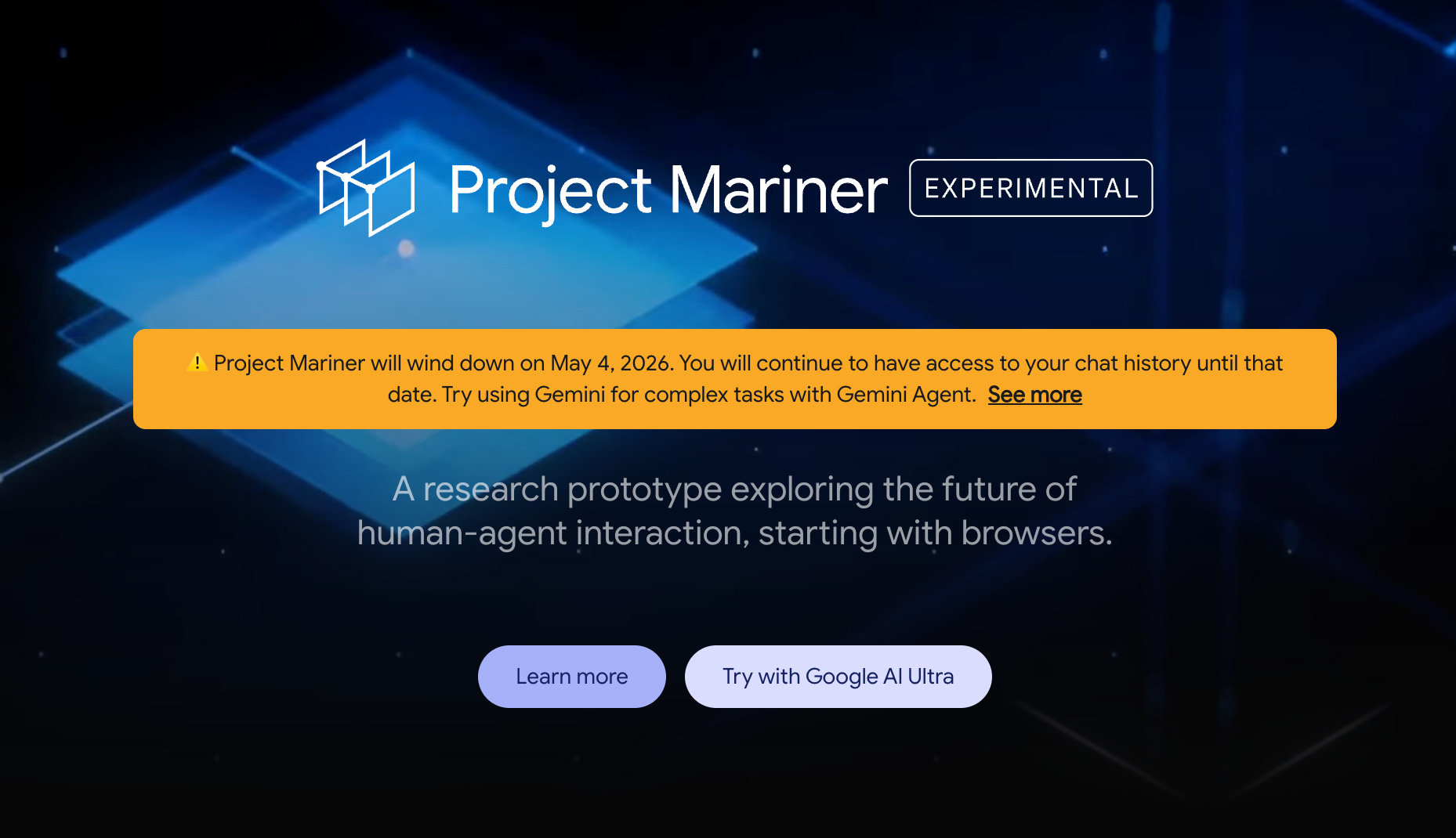
I could write an entire post on what Mariner taught me - and I might try to get to this sometime in the future. But here’s a few things I will always remember from the experience. Experiences that continue to shape how I think about products.
There’s a moment in every Mariner demo where the mouse starts moving on its own. Text appears in a text box. The browser navigates to a new page - not because someone clicked, but because an agent decided to. People watching this for the first time would go quiet. Then something would shift in their expression. It was this mental unlock - oh, this thing can operate in an environment it doesn’t control. Not an agent living inside an app someone built for it, but an agent reasoning and acting in the real world. That reaction - the “I need to rethink everything” face - was the most valuable thing Mariner unlocked in my thinking.
And then there was the lesson - the hard truth: people don’t like waiting. As magical as those moments were, watching an agent take 30 seconds to do something you could do in three is a hard sell. Cool technology isn’t always the right technology for a given problem. What Mariner revealed, more than anything, was to start with the right user experience and then figure out which pieces of technology serve it - not the other way around.
Those lessons didn’t disappear when an experiment sunsets. They carry forward into everything you continue building.
That’s what “build to learn” actually means. Not every project becomes a product. But every project - if you’re paying attention - teaches you something you couldn’t have learned any other way.
Still Early
The fireside said it. The demo proved it. The sunset confirmed it.
We’re still so early. And the best thing you can do when you’re early is build.
Loved the line "passion is the thing that keeps us going even when things are getting hard". I like to call it the "messy middle" when the initial starter sizzle has worn off but the end goal is still a long way off!
Profound thoughts - esp about taking lessons from projects that are sunset.