


The other week my husband and I took our 3 girls camping at Redwood National Forest. We spent the long weekend with another couple who also had a daughter the same age as my kids. It was a wonderful weekend camping in the forest, throwing rocks into a river, hiking, and finding more banana slugs than I ever thought possible! On the 7+ hour drive back to San Francisco, after way too many Disney songs, I decided to try to use Flow Music to make a song about two Banana Slugs - Trixty and Mixty (my eldest’s choice, we had gotten her 2 toy slugs at the store in the park). We riffed on the idea a bit, and eventually landed on this weird yet delightful song: Yellow Rush.
After listening, my daughter asked me the most ridiculous yet thought provoking question, and I can’t stop thinking about it:
Ophelia: “Mom, is this a real song?”
Me: “I mean, yes. Of course it is. We are literally sitting in the car together listening to it. What do you mean ‘is it real’?
Ophelia: “No but like, do my friends listen to this?”
And that’s where it hit me - something that I always knew but hadn’t really spent enough time thinking about…real to her meant a shared experience. Something that she didn’t just enjoy in isolation, or even with just me - she wanted her friends to be part of it.
Sidenote: this then led me down a path of looking into how one might add a song to Spotify so that I could make it “real”. But even then, I’m not sure how many people really want to listen to a song about a Banana Slug…it’s one of those things where you may have had to have been there (or are really into Banana Slugs - which, who knows, maybe there is some niche audience…). But I did at least share it with my friends who we went camping with so that their kid could listen to the song since she also ended up with these silly little Banana Slug toys after the weekend.
Still, I suspect that her love for the song wouldn’t be nearly as deep rooted as my daughter’s because my daughter didn’t just experience the topic first hand, she helped make the song with me. And that’s the dynamic that I’m still thinking about - what does it take to create something that feels “real”? Something for a small group that feels personal, that you all have a connection to - and is there a place for AI to help with this?
I spend so much of my time using AI either for personal productivity or creative exploration - but even then, the output of what I share isn’t inherently “social”. Sure, I make silly videos like this one where I turned my dog into a dragon and a unicorn:
Gemini Omni is pretty wild to play around with
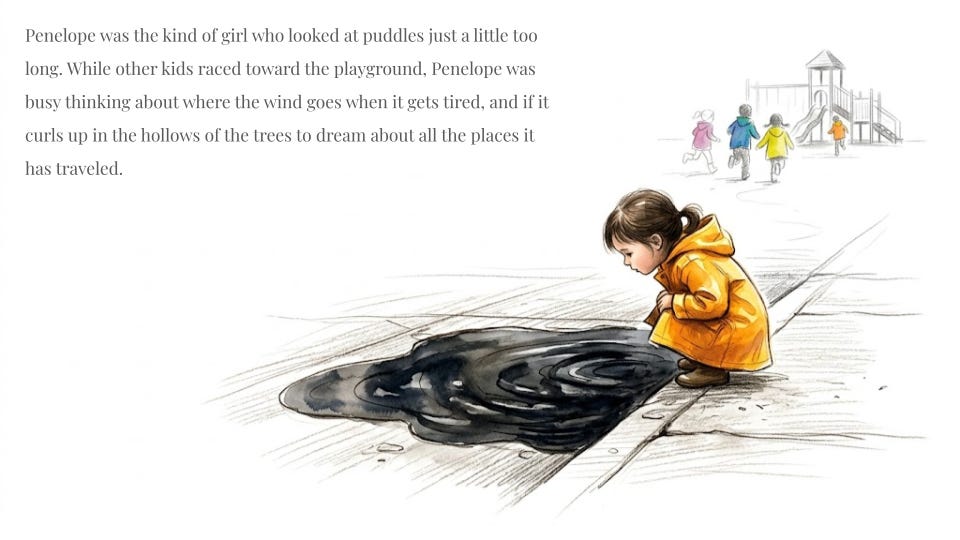
But even then, I’m using AI for my personal reasons, with my own personal context seeding what I create - which explains why so many of my sidequests are family friendly - like the first page in this kids book I’m having fun making for my kids:
And that’s the thing I can’t get off my mind - how much AI use has centered around individuals. A 1:1 mapping of product <> user. And whether there’s an opportunity to build something different. Something more social.
That same week we went camping, I came across a post on X that called out the fact that Hwy 101 is riddled with AI billboards but that none of them are consumer apps. Everyone is so focused on productivity (I get it, I am too), but if I think ahead to the future - if AI really does help us solve “toil” and lets us focus on the things that we really love doing… what products should exist then? Maybe a better way to ask this is, ”what do we, as people, want to be doing? And then how can we build things in service of that?”
Now, I feel like this is a delicate area because on the one hand, I do think that we can use AI to create delightful, socially-rooted products that help us be more present - but I think we need to be careful about how we do it. It can’t feel like we’re just shoving AI down people’s throats. It’s quite apparent that this feels like what’s currently happening, and it isn’t going over well with the younger generation. Just take a look at all the retaliation to Commencement speeches given to graduating classes this year: Former Google CEO Eric Schmidt booed during graduation speech about AI, Commencement Speaker Praised AI as the ‘Next Industrial Revolution.’ Then the Booing Started, and Glendale Community College President Tiffany Hernandez was met with resounding boos as she explained that the school was using AI to read names for the ceremony. Meanwhile what did get applause? This: Ronny Chieng Tells Harvard to ‘Destroy AI’ as Graduates Cheer.
Another data point to throw in the mix is the Pope’s encyclical: MAGNIFICA HUMANITAS. It’s long, and I have not read the whole thing - but I did throw it into NotebookLM - like many others - to make it easier to extract key takeaways from and ask questions about it: Notebook on Magnifica Humanitas. One line that stood out “We can embrace the technological progress that alleviates suffering and unlocks new possibilities, provided that we do not abandon the very essence of our humanity, namely the capacity for relationship and love.” While I personally am not religious, I do strongly agree that people are inherently social creatures who value personal connection.
Which brings me to this past weekend. I started my Sunday like I normally do - trying to juggle about a thousand things. Making sure the kids had breakfast, that everyone was washed and dressed, doing yoga and going on a (really) short run, putting together a product pitch for a review on Monday after a big pivot decision on Friday, and painting my daughters nails so she could look fabulous for the birthday party we were about to all go to…and that was all before 10:30am. Once we got to the party though, I stopped trying to multitask and instead just enjoyed the day at the playground. So much so that we ended up deciding to continue the fun and head to a street festival on the other side of town with another family from my kids’ school.
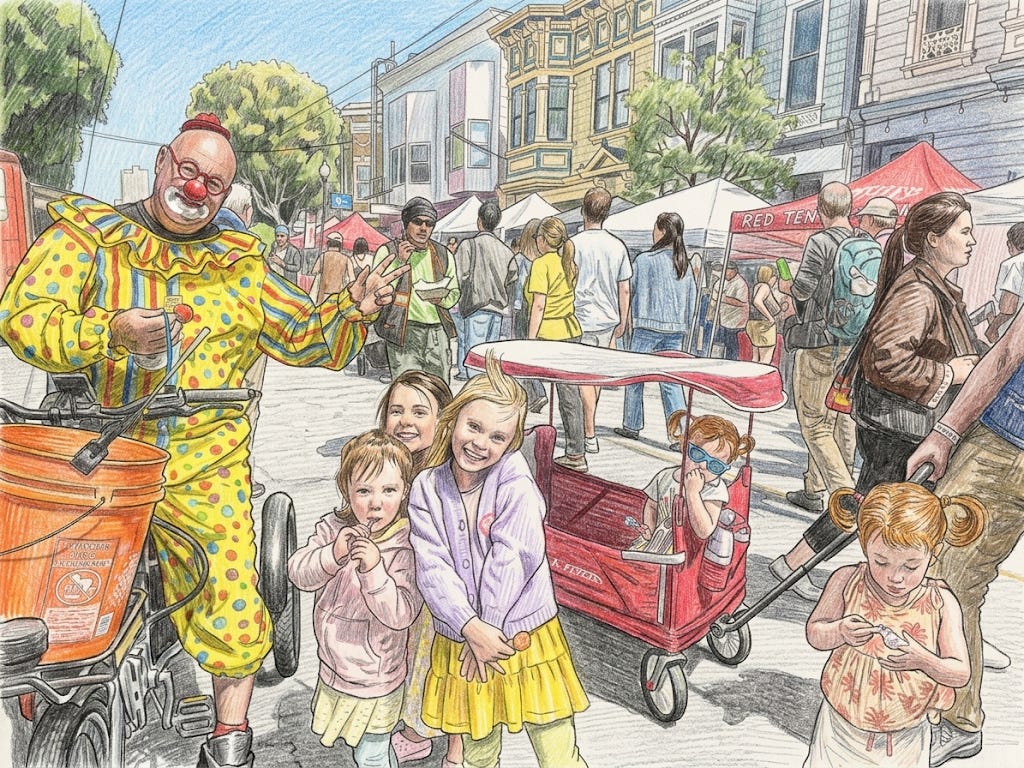
It was a crazy long day outside, in the sun, just having fun and being social - and it was exactly what I needed. I had started the day thinking I wanted to get a bunch of work done - and I did still manage to fit in a good chunk in the morning and evening - but it was so nice to also just go outside and hang out with other people.
So how does AI play into this? That’s the million dollar question (or perhaps trillion dollar question given current startup valuations!). While I definitely don’t want to end up in a world where I’m imagining users on their phones the entire time they are trying to be social, I do think there are moments throughout the day that could have been improved. From the lead up, to the actual event, and even after. And this is just one example of a social day. Perhaps a more obvious one where I think AI could have been helpful was at my friend’s 40th birthday the other weekend.
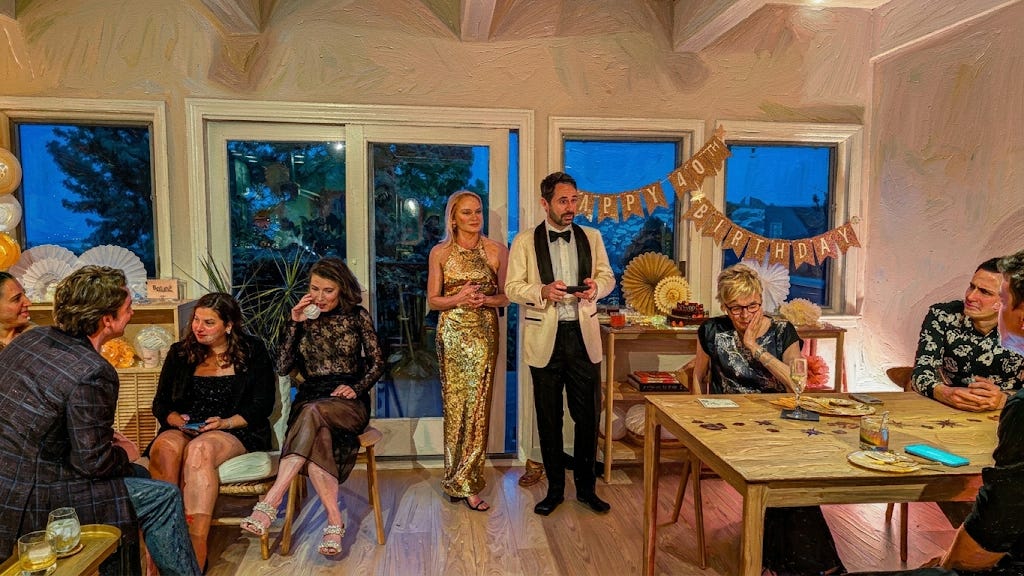
At the party, her husband had put together a fun trivia game, “Daria over the years.”. Daria over the years. We self assembled in groups of 4 and then he read out about 10 questions. We each wrote down what we thought, then he read out the answers and we scored ourselves - honor code style. This was a super cute idea, and if I were to take my “build cool products” lens to it, I could imagine a possible better one being an “app” where, ahead of the party, it asked all the attendees to contribute either an interesting fact or photo of Daria. Then, it could source from all of those to create the trivia questions for the night of. The benefit of this is more varied questions, but also you could end up with cool questions only possible with an app - like a photo that had been slightly blurred, and guests would have to guess what it was from. After the party, the app could also notify everyone and ask them to add photos they took - then it could automatically turn them into a fun video of the highlights from the night.
This was my 5 minute thought experiment on the event - I’m sure if I sat with this longer I could come up with other ideas - ones that would be geared towards being additive to the event, rather than a distraction.
Which brings me to the bigger thought I’m turning over in my head: what if the goal should be engagement with other people, not just the app? How do we build successful products around that?
https://learn.mit.edu/search?resource=18652
This is a thoughtful and well versed human issue that we’re also pursuing because of the downstream effects due to changes of behavior. Our thesis is that there are actors who accidently (product gap / unaddressed unhappy paths) or maliciously (romance chatbots for purposes of grooming and social separation) act today in the human connectivity space. The malicious groups, you may surmise, are doing this to further isolate for financial leverage the cost of emotional and psychological harm.
Our solution is to maintain these social connections in a meaningful way that’s not prescriptive but suggestive and re-wire the existing dopamine seeking user mindset to pursue true in person activities and interactions to ward off being impacted by the malicious groups.