



Over the last few weeks I’ve reviewed over 100 resumes for the 0-to-1 PM position I recently posted about on my team. This is a special role that I’m hiring for - and the right candidate will be someone who not only has the ideal background, but is the right fit for the people on the team.
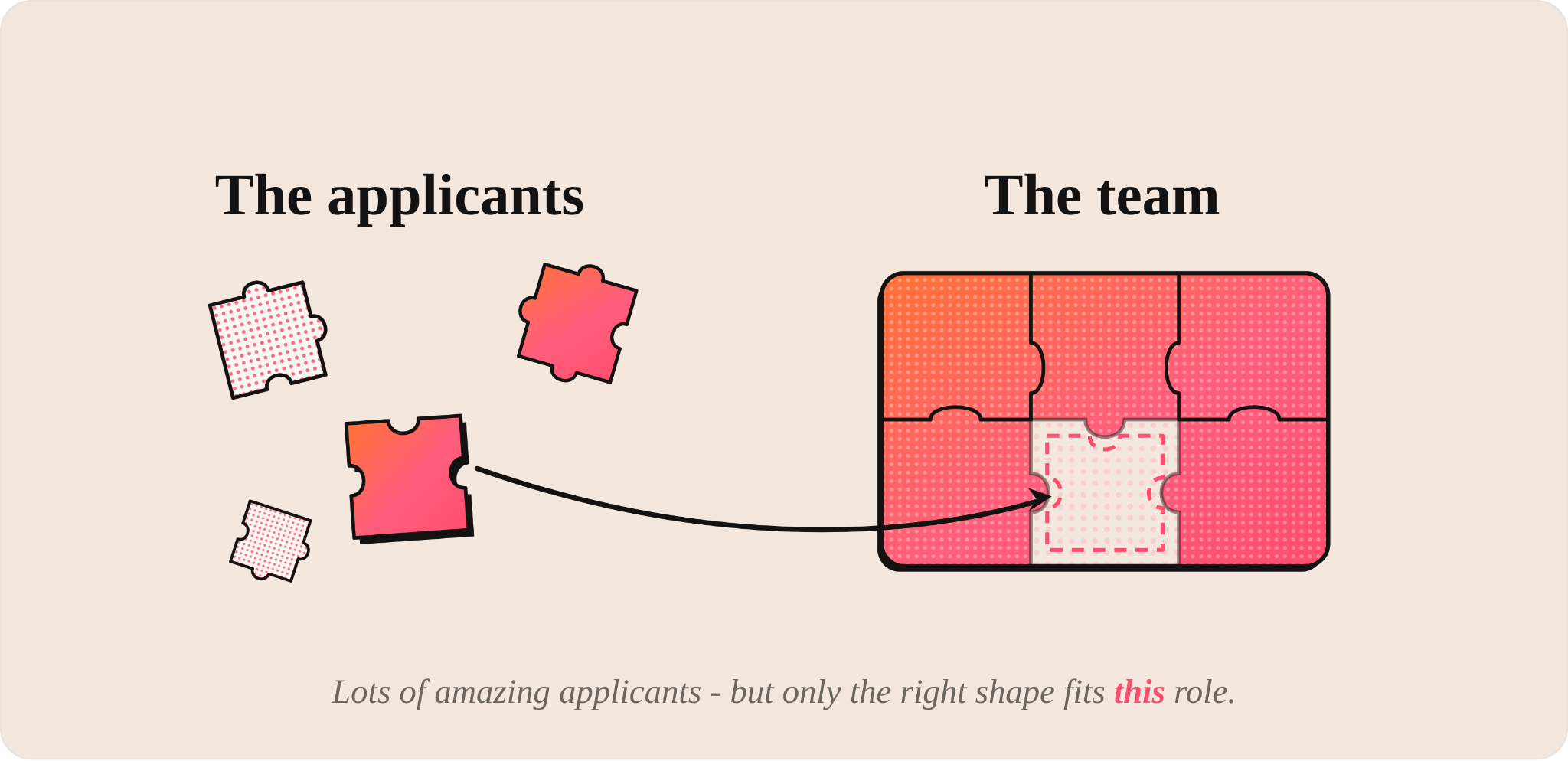
Takeaway: you could be an amazing PM, but this role/team might not be the one that fits you best.
So…how am I trying to find the right person to fill this role? It starts with a review of the resume - but more and more I’m finding this to not be super helpful. Between AI rewrites and generic sounding bullet points, it’s hard to really see the person behind the paper. So this time around I decided to jump to 15 minute video calls that were centered around three core questions. These questions aren’t the entire interview process, but rather, they are specifically designed to help me get at the answers I would usually try to extract from the resume. I sent these questions to candidates ahead of time so that they had adequate time to prepare and could come ready to make the most of our 15 minutes.
Question #1: Bring Your Resume to Life
“Tell me about yourself and your background - please focus on your past experiences that are most relevant to Labs and this role.”
This question is designed to bring your resume to life. To make it interesting and understandable.
After several interviews and one-on-ones with candidates for other roles, I realized that the best ones had one thing in common - they “showed” me their product portfolio and what they had done in their careers to date. They used visuals and words to give me context, and by talking / showing me their work, they didn’t use unnecessarily sophisticated sounding phrases that now just sound like fillers and buzz-words. Best of all, it showed me what they were passionate about, and in the best cases - they also told me what they learned from their experiences and how it’s shaped them as a PM. All of this context helps me to connect the dots and understand if their skills, knowledge, takeaways, and lessons learned would be helpful if applied to this role on this team.
For this particular question I wanted to both provide an example of what I’d love to see, and calibrate on what I could expect, so I decided to answer the question myself. Here’s my roughly five minute video:
Note:I kept this background pretty expansive, yet fairly shallow. If I were focusing on a particular role, I might trim out certain segments that weren’t especially relevant and go deeper on those that were.
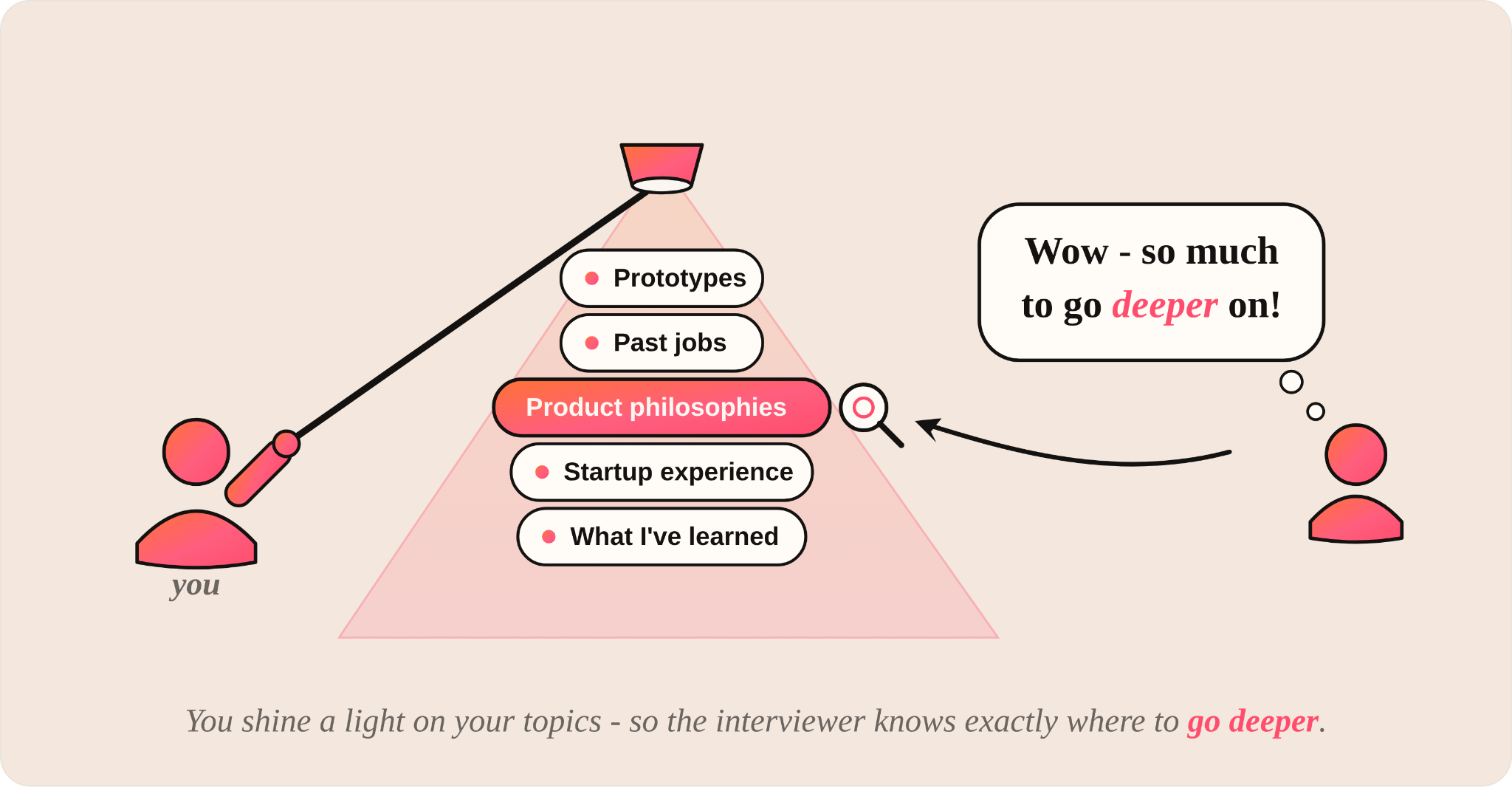
Another thing to consider with this video approach is that what you say should provide just enough depth to be informative, and then, if the interviewer wants to focus the conversation on a particular area (now that you’ve shed a light on it), you can go deeper.
Reflecting back on the hundreds (if not thousands) of meetings, discussions, and conversations I’ve had over the years - I’ve learned that as prepared as you are going in - you don’t always know where they will lead. I’ve spent hours prepping for some discussions, only to leave feeling like we never got around to actually talking about the most relevant thing. Conversely, I’ve also been in conversations that turned out amazing, but only because a seemingly random side comment got us going down a great talk track that I hadn’t intended to cover.
By giving a high level overview about yourself up front, you’re essentially opening the door on a variety of different topics, and then allowing the interviewer to pick up on something that might be most helpful for them to have you go deeper on. It’s the most effective version of a “choose your own adventure” type of discussion, while also solving for the “blank start” problem that happens when there is no agenda or materials to react to.
Question #2: Product Showcase
“In Labs we look for people who love building! I would love for you to show me something you’ve built and talk to me about it. It could be why you built it, what you learned, or anything else you’d like to highlight. This could be a personal project or something bigger.”
This is where I get to really understand how you think and what your product taste is. It’s the closest I can get to seeing what you might be capable of and what working with you could be like. It also gives me a chance to ask the types of questions I would ask a PM on my team (typically in a product review). These questions could range from strategy questions to UX choices to product decisions, even GTM and growth.
I also genuinely appreciate a good live demo - or attempt at one. So don’t worry too much if there are a few hiccups in what you are showing me. As we say…the demo gods don’t always work in your favor…but I will always root for you.
I wrote more on this topic a couple weeks ago:
What's Standing Out in My AI PM Hiring Loop This Week

This week, Coinbase announced it’s cutting 14% of its workforce and rebuilding the company around what Brian Armstrong calls “AI-native pods” - small teams, sometimes a single person, directing AI agents across what used to be the work of an engineer, a designer, and a PM. The middle management layer is getting flattened. “Pure managers” are out. “Playe…
Question #3: Why You?
“Tell me why I would be making the biggest mistake of my career to NOT hire you!”
The reality is, this is the question I spend the most time asking myself. So help me answer it! A great PM knows how to position and pitch - this is a chance to do just that. Tell me what I should know that maybe I haven’t had a chance to infer quite yet. Help me focus on what you think are the core defining characteristics of yourself. Give me something to think about.
Past, Present, Future
Question #1 is about your past. Question #2, your present. Question #3 is my best attempt at your future.
My process keeps evolving - AI has moved the ground under all of us, candidates and hiring managers alike. But the goal hasn’t moved: find the right fit for the role. And that’s good for everyone. You want to land somewhere you’ll thrive. I want a team where people bring out the best in each other.
That’s why I’m sharing all of this. A prepared candidate is the best use of time - for you AND me!
Jaclyn.
The team-fit point is underrated. I hired a PM once who'd built and sold two products solo, objectively the strongest background of any candidate, and it was a bad fit because our team needed someone who thrived on consensus-building, not someone used to unilateral calls. Have you found any resume signal that actually predicts team fit, or does that only show up in conversation?
I noticed 10-15 years ago that PM became the most sought after career path coming out of b-school (MBA). Many of those MBAs were not engineers, didn’t have an equivalent of a CS education, and never built anything.
The trend continued for a decade or so.
Nothing wrong with an MBA to PM route (I came from that background). But many hiring managers de-valued the coupling of a CS background (what I started my career with) with an MBA because less and less had that background to truly know the value, unfortunately.
I appreciate where you’re going with your most recent posts. I’d like to share my passion project with you—no doubt you’ll be impressed.